Welcome to Part Two of Calico In Conversation with Aubrey Gross. If you missed Part One: Hard to Swallow, feel free to click here to catch up!
Editor’s Note: this interview was originally conducted in March through August of 2016.
***
I feel like over the years, genre fiction has gotten to be far more accepted by the mainstream, though sometimes you’ll still get a literary snob complaining about things like YA fiction or Game of Thrones. But thanks to the film and television industry, I feel like there’s a boom there that I hadn’t previously seen in my lifetime. EXCEPT: why is romance still the red-headed stepchild of the genre market?
I think it’s a combination of things. There’s the misconception that romance is “mommy porn” or “porn for desperate, single women,” which couldn’t be further from the truth. Romance isn’t pornographic. Romance is about emotions, and a lot of people don’t “get” why anyone would want to read a book that’s primarily character-driven and chock full of all kinds of emotions (and, yes, often sex). My reason for reading romance is that it reaffirms my belief in love despite the odds, whether those odds be a psychotic killer on the loose, a mother determined to see her daughter married off to the duke rather than the earl, the complexity of a long-distance relationship, or a heroine who’s unable to trust after being left at the altar by her first love. Romance is about triumph and taking risks and stepping out of your comfort zone and growing as a person — all in the name of love. A lot of critics say romance novels are unrealistic, to which I say: but are they really? In our relationships, we all have things we have to overcome in order to be happy. Distance. Past experiences. Wariness. Job dynamics. Our own internal fears. The list goes on and on.
And I’ll also be quite frank — I sometimes think part of the derisiveness is simple jealousy. In 2013, $1.08 billion in romance novels were sold according to BookStats. And according to Nielsen and BISAC, romance novels accounted for 13% of adult fiction novels sold (source: RWA). Because those numbers only reflect books with ISBNs, there are a lot of indie books NOT being reported on (the folks over at Author Earnings do an amazing job of explaining this). The July 2014 Author Earnings Report took a look at the genre breakdowns, and at the time 66% of romance novels in the Kindle Store were indie published (my guess is that it’s probably more than that now, just from anecdotal evidence). Basically, what it boils down to is that a lot of people read romance, which means more readers (and yes, more money) for romance authors as a whole. I might be off base with that one, but from personal experience and the experiences of other authors, I don’t think I’m too off the mark on that. 😉
I’ve often wondered, too, about the fact that romance tends to be the ONE genre that’s primarily driven by women, if there isn’t a little bit of institutionalized sexism happening here, intentional or not. And no, I’m not just blaming the men; women can and are just as bad when it comes to criticizing the genre, its tropes, and its readers. I admit to being guilty of it myself, once upon a time ago.

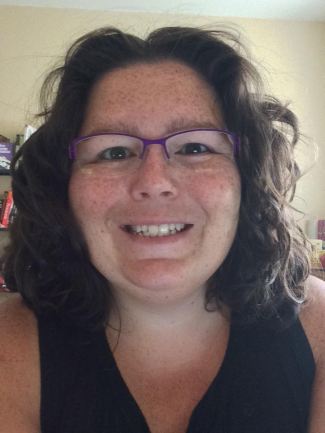 Aubrey’s been reading and writing since she was about two and a half, and has been a storyteller for as long as she can remember. Early on, she discovered a love of romance, reading her first Harlequin somewhere around age twelve (it featured an F1 race car driver, as this was long before NASCAR was cool). She wrote her first romance novel in high school. It was admittedly not very good, but she wrote another, and another. She thinks those first few might still be on a floppy disk somewhere in a storage bin.

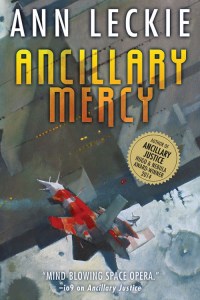 Greetings, and welcome to week three of shameless self-promotion! Our third week at Speculative Chic was SUPER BUSY, with three days in a row with two posts instead of one. Why all the craziness? Well, we wanted to get our Hugo Reading project wrapped up before the rockets were handed out on Saturday night (and to that affect, CONGRATS to N.K. Jemisin for her Best Novel win!), and I have to say, it’s been a joy to see all these different bloggers reviewing in one place! But we did MORE than just book reviews, so let’s break it down:
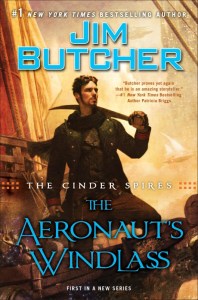 Thursday had Nu reminiscing about the

 Welcome to third and final installment of Calico In Conversation with J.L. Gribble. If you missed Parts One and Two, click below to catch up:



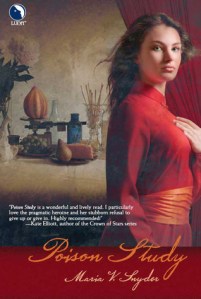 I remember some overlap. I got to hear you read from Magic Study as your thesis defense, and I also remember seeing the very early pages in workshop that made up the opening chapter of Inside Out. But my favorite memory is this: attending my very first SHU class when you were handing out bookmarks promoting Poison Study. I saw the cover art and flipped out, because I’d drooled over the hardcover just weeks before in a Barnes & Noble! So tell me: what made you, a published author, apply for the SHU Writing Popular Fiction Masters Degree?


 Calico Writes